Supporting activities
Public Consultation
A public consultation is the process of interaction with the public, including affected communities (both positive and negative impact) and other stakeholders, to enhance transparency, efficiency, accountability, and effectiveness of PPP projects. It includes explanations and details about the infrastructure provision plan and obtain responses and/or inputs from affected communities and stakeholders. In the preparation stage of the PPP project, the GCA shall conduct the public consultation.
The public consultation is thorough if carried out in three stages including implementation, post-implementation, and recording of the outcomes. All reviews recommended to be part of the Pre-FS should have been completed by the GCA before the GCA conducts the public consultation.
Public consultation is not to be mistaken as an exercise to convince the community for the planned PPP project or as a checklist exercise in the preparation stage. In fact, conducting a systematic public consultation can influence the smooth preparation and functioning of the project in the long term.
Refer to the Public Consultations Template for guidance and details on conducting public consultations for a PPP project.
I. Implementation of public consultations
The GCA shall systematically prepare and implement the public consultation by including four components:
- Scheduling the events and identifying the venues
- Identifying the stakeholders and listing the consultation participants
- Identifying and onboarding the resource persons and
- Preparing the Minutes of discussions on public consultations.
- The GCA shall prepare a list of invitations for potential participants of the public consultation. Then the GCA shall set a public consultation calendar if multiple public consultations are to be held or shall set a date if a single public consultation is to be held. The GCA may consider conducting public consultations more than once if needed, for example, in the case of changes such as technology options, services, output specifications, or other forms that result in project modifications from what was informed in a previously conducted public consultation.
- The GCA shall determine the venue or location for the public consultation to be held. Thereafter, the GCA shall send out the invites to invitees/potential participants indicating the public consultation date/schedule of dates, a background of the PPP project and the expected outcome of the public consultation. The GCA shall send out the invites in advance and give sufficient notice for the invitees to confirm their participation/attendance at the public consultation.
- The GCA shall ensure wide representation of public consultation participants. Consider attendees representing gender equality, disabilities, and social inclusion. Participants may include, but not be limited to, non-governmental organisations (NGO), and/or regional people's representative councils, if necessary, for projects initiated by regional heads or council members, academics, other relative references etc.
- The GCA shall prepare for the public consultation by appointing the relevant and most appropriate resource persons. Prepare and share the terms of reference (TOR) for resource presentations and ensure to prepare the resource presentations for public consultations as per participants’ ability to receive the information and in the language that is widely understood. Deploy resource persons as individuals who are skilled at conducting public consultations, skilled at obtaining responses and/or inputs from various kinds of stakeholders/participants, and skilled at navigating and ensuring that the expected outcomes of the public consultation are met.
-
For the minutes of public consultation to be generated, first the GCA shall implement the public consultation and second, supplement the implementation of public consultation with supporting activities. Supporting activities include recording of the attendance of participants, preparation of discussion minutes, documentation of activities, and signing of minutes of attendance from the participants (stakeholders, affected communities etc.).
If necessary, the GCA may conduct public consultations for every activity in the preparation stage of the PPP. The GCA shall implement the public consultation as per schedule at the locations identified and as per plan, factor in contingencies, and note all the above components and details here.
II. Post implementation of public consultations
The implementation of the infrastructure provision plan for the PPP project considers the results of public consultation. The GCA shall document the results of public consultation in a public consultation report. The CGA shall include in the report, the public consultation details and processes, the list of participants of public consultation, minutes of the discussion held on the infrastructure provision plan, and conclusions and follow-up plans. The GCA shall attach the public consultation report to the Pre-FS as the results of the public consultation are an integral part of the Pre-FS.
III. Outcome of public consultations
The GCA shall ensure that the outcomes of the public consultation during PPP preparation capture the following details:
- Verification of the project’s compliance with social and environmental norms in line with relevant laws and regulations
- Obtain inputs regarding community needs related to the planned PPP collaboration and input from other stakeholders and
- Ensure readiness of the PPP.
Public consultation outcomes should be those that the GCA’s can consider for the implementation of the infrastructure provision plan. As an outcome, the GCA shall also ensure that the public consultation has enabled it to determine the funding scheme for the infrastructure provision plan.
Market Sounding
Market sounding is an activity of the GCA to explain the concept behind the project. This activity confirms that the views of those who prepare the PPP project’s feasibility are also shared with the views of key private sector participants in the market. An effective market sounding exercise would enable discussions between various stakeholders at initial stages of the PPP process. This not only tests the viability of the project’s details, but it also obtains precious feedback on how aspects of the project should be defined to ensure private sector participation and foster competition. This section provides an overview on the key aspects of a market sounding exercise for PPP projects during Pre-FS.
- Market Sounding can be carried out through, amongst others, one-on-one meetings, and the promotion of PPP with potential investors, national & international financial institutions, and other parties who have an interest in implementing PPP. In some cases, the best way to do this may be to hold an open public meeting. In other instances, the GCA may send a questionnaire form through email to potential investors and lenders or use other methods deemed suitable for the project’s market sounding exercise.
- The project team should ensure that the commercial feasibility exercise captures the potential investor’s perspective of the project. The assumptions made, and the base case they generate, will be completely ineffective if the project team fails to understand the private sector’s value drivers and the main financial and operational constraints that companies might face during the provision of the infrastructure and services.
- For this reason, many governments encourage a series of soft market tests or market soundings during the Appraisal Phase. Their purpose is to test the project viability in the sense of ensuring that it will attract bidders and thus reach satisfactory closure. At the same time, market sounding also helps to communicate the status of the project to the private sector, thus allowing interested companies to start preparing for the future tender of the project.
- Also in this process, valuable feedback can be obtained that may have important effects on the financial model, the technical requirements, and the preliminary contract structure.
- An effective market sounding exercise provides an opportunity for a structured dialogue between the private and the public sectors at initial stages of the PPP process. The information may be provided through a presentation, a project information memorandum or even, at a more advanced stage, by publishing the draft contract for comment (when market sounding is produced during structuring).
- The document should describe the project details that have been defined up until the market sounding is conducted and clearly point to the still uncertain aspects of the initiative. A very transparent approach should be considered, and the project obstacles identified should be clearly stated.
-
There are several ways to approach the private sector once the project
information memorandum is prepared. In any of these approaches, it is especially
important to encourage formal contributions by the companies, to obtain
structured opinions on the matters that arise. Examples of widespread practice
are as follows:
- The project information memorandum can be posted online and a request for written comments can be made to all the companies identified as relevant
- One-to-one meetings can take place. These typically produce effective results. In this case, the project information memorandum and accompanying material should be the main guideline for the presentation.
- Running polls or delivering a questionnaire to ask the interested parties about the most relevant points for the authority, but without discouraging them from raising other potential points from their own perspective.
- There is an optimum moment for market soundings. This cannot be too early during appraisal (Pre-FS), when the project description is too broad to provide any effective description of the government’s intentions in terms of size, capacity, and project scope. Conducting market sounding too early makes the government sound imprecise and the relevant questions will not yet have been identified and therefore cannot be asked.
- The market sounding also cannot happen too late, when the project definition is too detailed, as may leave little room for effective private sector feedback. This makes the private sector lose confidence about its ability to effectively influence the process.
- The basic rule is that the fundamental aspects that describe the project (in terms of the technical requirements, financial model, and preliminary contract structure) should be at an advanced stage before the sounding starts, but they still need to be flexible enough to accommodate the feedback received during market sounding.
- The market sounding activity can be done more than once.
- The GCA needs dialogue with experienced providers of the infrastructure and services. This enables the GCA to collect expert opinions on market conditions, technical aspects of the project, and the allocation of risks. Experienced providers might not exist in the country, especially if the project is a first in its sector. A good practice in this case is to search, as far as possible, for international providers that can offer international expertise in a particular type of project. New entrants should also be heard, especially to search for ways to eliminate unintended barriers to a competitive procurement.
- A second group of companies are lenders (especially commercial banks) which could offer finance for the project. They might provide relevant insights about the drivers for commercial feasibility as well as the general market conditions for a specific sector.
- The GCA should also consider including international financing agencies and multilateral development banks in the market sounding exercise, diversifying the perspective on bankability offered by the consulted companies. It is good practice to keep an updated list of potential providers and banks and their stated or historic interest by sector and project size.
- There is no definite practice regarding aspects of the project that must be tested through engagement with the private sector. That depends on the type of project and sector. Good practice is to include all points in the project information memorandum, with emphasis on aspects where the GCA seeks feedback.
-
Some general points are as follows:
- The scope of the project, in terms of infrastructure design and the preliminary output specification;
- The main technical risks identified that might affect the ability of potential bidders to deliver the infrastructure and the services;
- Expected capital and operations costs;
- The payment mechanism and other revenue schemes envisaged;
- The general aspects or risk allocation already defined;
- Financial assumptions such as the debt conditions and cost, and the tax and accounting assumptions;
- Proposed timetable for the period from procurement to the commencement of services; and
- Proposed contract structure, including risk allocation.
The team responsible for the sounding must have expertise, be knowledgeable about the project, and be respected by the market they are trying to sound. This is why GCA’s commonly use external advisers, experienced in the project’s industry, to help conduct effective market sounding.
Activities to obtain Government Support and/ or Government Guarantees
Activities to obtain government support and / or government guarantees are regulated further in accordance with the laws and regulations governing government support (including PDF, VGF and AP) and / or government guarantees.
- Viability Gap Fund is a form of government support through the contribution of some of the costs of construction, provided in cash to a PPP project that already is economically viable but is not financially feasible. VGF can be given when there is no other alternative to make the PPP project financially viable. Local government can contribute to the provision of this support after obtaining the consent of Parliament. The figure below explains the process involved in obtaining VGF.
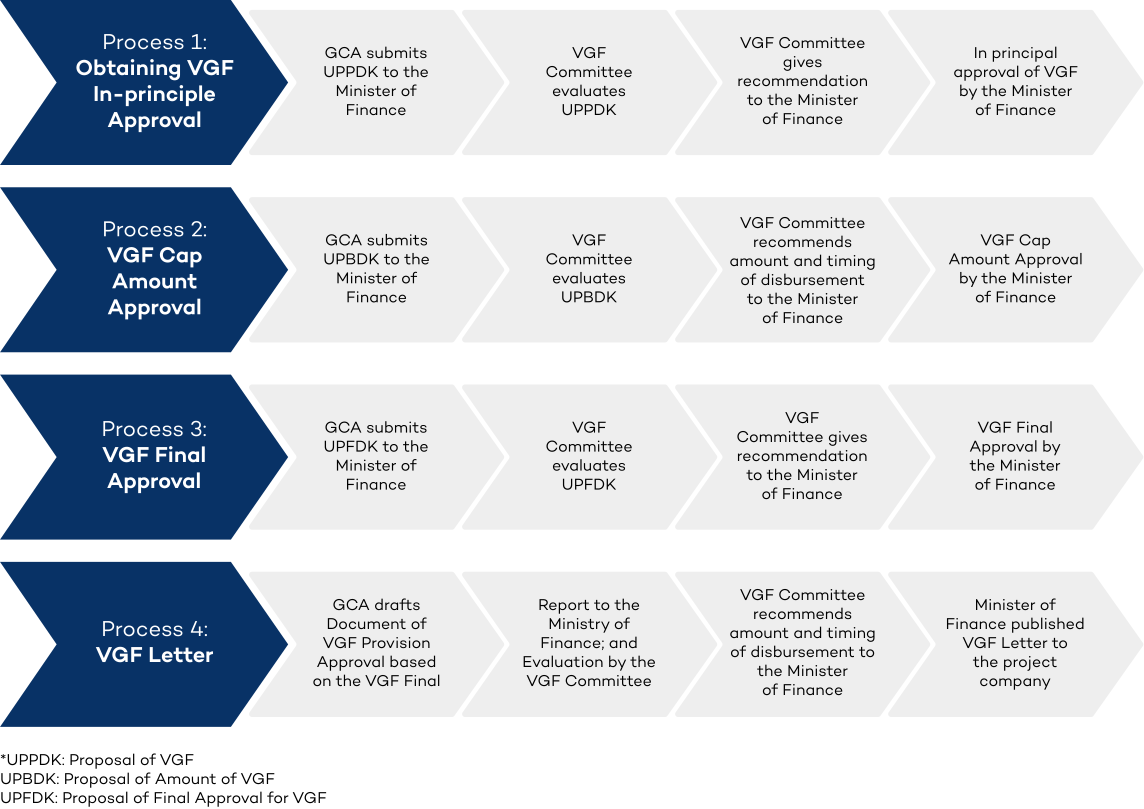
Source Ministry of Finance, 2020
- Availability Payment is a periodic payment by the Minister/ Chairperson of the Institution/ Head of the Region to the IBE for providing infrastructure services that conforms to the quality and/ or criteria as specified in the PPP agreement. The figure below explains the process of obtaining AP.
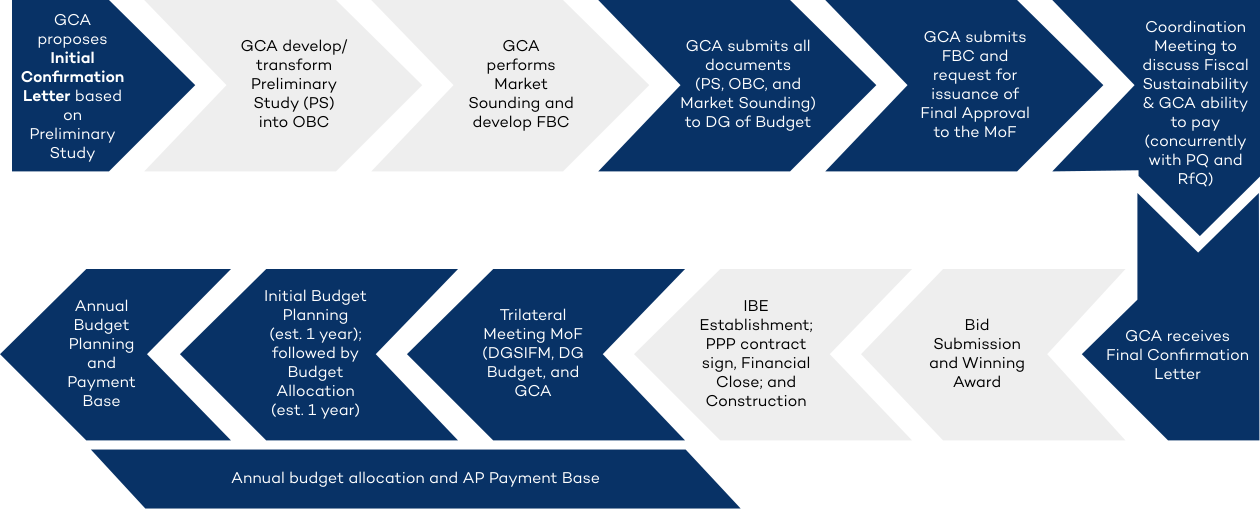
Source Ministry of Finance, 2020
- Infrastructure guarantee is a guarantee given on the GCA’s financial obligation to pay to the project company in the occurrence of infrastructure risks which has become GCA's responsibility based on risk allocations agreed in the PPP agreement. Infrastructure guarantee is implemented by IIGF as a single window policy. If the guarantee coverage exceeds the capacity of the IIGF, it will be carried out as co-guarantee by the Ministry of Finance and IIGF.
- Infrastructure guarantee is often a key criterion for private sector sponsors and financial institutions when making an investment or funding decision. In addition to the guarantee, the credit rating of the agency providing the guarantee is also key as the investors and financial institutions need to be confident that the infrastructure services provided are being paid for. The figure below explains the process for obtaining approval for Infrastructure Guarantee facility.
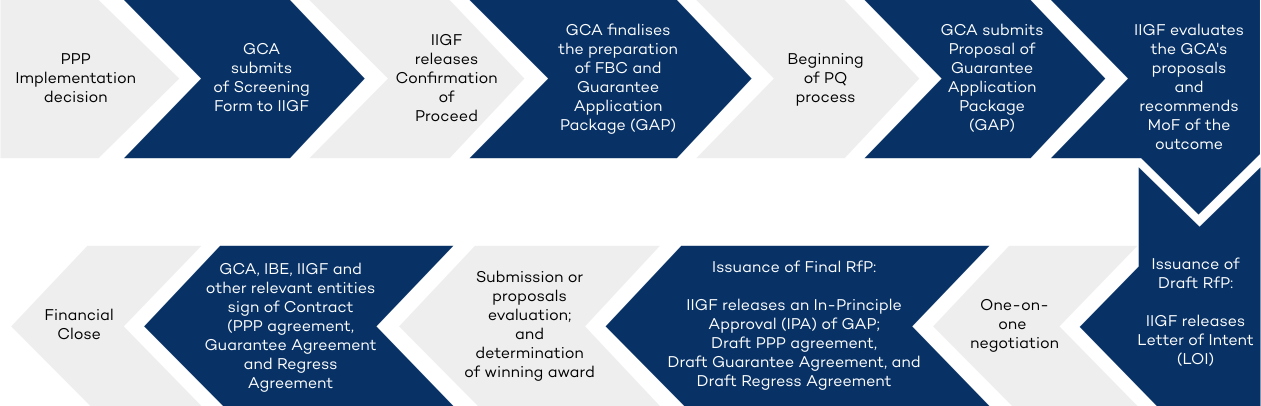
Source Ministry of Finance, 2020
Procurement Committee Readiness
A GCA is required to establish a procurement committee to carry out the IBE procurement. The committee is required to perform tasks, roles, and responsibilities to
- Prepare and execute the IBE and
- Assist in the process of signing the PPP agreement and preparing financial close.
- The GCA shall mention whether it has established/ appointed/ formed a procurement committee for ready-to-offer (RTO) projects for procurement of the IBE. Alternatively, the GCA shall mention whether it has delegated authority to the organisational unit under its level for the establishment of a procurement committee.
- The GCA shall confirm that the roles and responsibilities of the procurement committee are governed by the regulations of the institution responsible for government goods/services procurement policy. The GCA shall name the institution and mention the regulations applicable.
Other Supporting Activities Conducted by GCA
- The GCA shall declare its land acquisition plan and any acquisition efforts that have taken place so far. The GCA shall mention if any activity has been initiated or completed at the planning stage. For this, the GCA shall describe project site and land requirements and their funding plan or strategy to acquire the necessary land. The GCA shall mention whether a resettlement plan was a part of the land acquisition and if yes, how it was or is being implemented. Mention the timelines or schedules of land acquisition and resettlement. Mention any related challenges and how the GCA is overcoming the challenges so that the required land and land conditions are available for PPP development, as per schedule and while considering the provisions of the laws and regulations. The GCA shall ensure the conformity of land acquisition and resettlement planning documents as related to the PPP plan to obtain site designation.
- An environmental permit is a decision on environmental feasibility or a statement of environmental management ability that has received approval from the government or regional government in accordance with its authority. In this supporting activity, the GCA makes efforts to obtain an environmental permit for the PPP project, if required, in accordance with the characteristics of the PPP project, considering the provisions of the laws and regulations. This activity would have already begun in the planning stage. So, the GCA shall refer to the PS and carry forward any residual activity required to obtain this permit to facilitate PPP development.
-
The GCA shall follow the process below to apply for the environmental permit and
consider:
- If the PPP project is a business and/or activity that must have an Environmental Impact Assessment (AMDAL) or Environmental Management Effort (UKL-UPL), then the Environmental Approval application process shall be carried out by GCA following the provisions of laws and regulations. The preparation of AMDAL or UKL-UPL shall be done concurrently with the feasibility study during the PPP preparation stage. The IBE can renew AMDAL or UKL-UPL in accordance with the provisions of the laws and regulations.
- If the PPP project is a business and/or activity that must have an Environmental Impact Statement (SPPL), then the Environmental Approval application process shall be carried out by the IBE and/or
- The application for Environmental Permit in any form other than that referred to in (i) and (ii) shall be carried out in line with the provisions of the laws and regulations.
- In the technical preparation review (in the section on ‘Commercial Review’ in the Pre-FS), the GCA is expected to prepare for the utilisation of state/ regional property or assets in relation to the PPP project. As a supporting activity in this preparation, the GCA is meant to seek approval for such utilisation. To seek approval for such utilisation, the GCA shall prepare and submit an application for approval to utilise state/ regional property/ assets to the concerned state or regional authority. The concerned state or regional authority shall review this application and decide to grant or not grant this approval. The GCA’s application shall align with the asset requirement cited in the ‘Technical Preparation Review’ section.