A Public-Private-Partnership (PPP) lifecycle consists of stages including planning, preparation, transaction - until finansial close - and management of contract of the proposed infrastructure provision.
The management of contract stage of the PPP is to be carried out after signing of the PPP Agreement between the Government Contracting Agency (GCA) and the Implementing Business Entity (IBE) and after the IBE has secured financing for the PPP.
The aim of this stage is to control the implementation of the PPP Agreement during the construction period and during service delivery until the end of the PPP Agreement.
Management of contract or PPP management provisions are covered under the Ministry of National Development Planning/Head of The National Development Planning Agency (Bappenas) Regulation No. 7 of 2023 on The Implementation of Public-Private Partnership In The Provision of Infrastructure (Bappenas Reg. 7/2023). As per the regulation, PPP management refers to the management of the PPP Agreement between the GCA and the IBE with whom the GCA signs the agreement for the infrastructure provision of a government-initiated PPP and/or privately-initiated PPP.
This is the management of contract toolkit. The components of the management of contract stage and this toolkit include preparatory activities towards the management of contract, conditions precedent, construction, service delivery, transfer of the asset/infrastructure provision and cross cutting issues applicable to these components.
This toolkit provides details on all components and related tools, templates, and checklists that would facilitate and support the GCA’s management of contract activities for the PPP provision.
This toolkit begins with the ‘About’ and ‘Stages’ sections. These tabs set the context and introduce the components of this stage to confirm the GCA’s understanding of the components of this stage. ‘About’ and ‘Stage’ tabs precede the full descriptions & instructions, tools, templates, and checklists applicable to all management of contract components, appearing later in this toolkit.
Furthermore, hyperlinks are provided in the ‘Toolkit’ section. Each hyperlink takes you to a page dedicated to each component of the management of contract stage and provides detailed instructions about how to execute that component.
Therefore, the GCA shall navigate the ‘About’, ‘Stages’, and ‘Toolkit’ sections to confirm their understanding of management of contract before commencing the management of contract on the ground.
The explanations and instructions in this toolkit sections are largely sector-agnostic and could apply to all infrastructure PPP projects, unless otherwise specified or reference is made to a certain sector. Furthermore, the explanations and instructions can be understood and adjusted to the conditions and needs of projects under evaluation in different sectors and related regulations & sector policies in addition to those stipulated in the Bappenas Reg. 7/2023.

Introduction to Management of Contract
There are 2 (two) dimensions to understanding management of contract in a PPP project.
One dimension is that management of contract in a PPP project is the process that enables both parties i.e., a GCA/its appointed advisor/consultant and the IBE in a contract to fulfil their respective obligations to be able to deliver the objectives required from the PPP agreement, once the contract between the parties is signed and the deal is agreed.
The second dimension of management of contract is proactive management. Proactive management includes anticipating future needs as well as the requirement to react appropriately to unforeseen situations that may arise during the contract period. Management of contract seeks to achieve continuous improvement in performance over the life of the PPP agreement.
For the purposes of this toolkit, management of contract applies from contract signing until project hand-over, but also refers to preceding management of contract activities that begin in previous stages such as planning, preparation, and transaction as a foundation to the actual management of contract after signing.
Implementing effective management of contract practices will enable the GCA to achieve project objectives and Value for Money (VfM) outcomes on behalf of the community that the project is intended for.
From an IBE management perspective, good practice in management of contract of a PPP project requires balancing of competing project constraints such as scope, quality, schedule, budget, resources, and risks.
Specific project characteristics and circumstances can influence the constraints on which the management of contract teams of both the GCA and the IBE are required to focus on because if a single factor changes at least one other factor is likely to be affected during the management of contract.
The balancing activity is continuous and important, given the long-term nature of PPP agreements. The operating environment may change over the project lifecycle and the project itself may pass through a number of stages and significant events. Each lifecycle stage and significant event involves risks and opportunities for the GCA to implement control and mitigation strategies. Therefore, with such dynamics, the GCA’s management of contract strategy evolves over the project lifecycle.
In this context, management of contract teams should be skilled and experienced to assess the situation, adapt to changing circumstances & significant events, balance the demands, and maintain proactive communication with stakeholders through the project lifecycle and for a successful project delivery.
Significance of Management of Contract
Management of contract is a crucial stage of the PPP lifecycle. The stage is reached after significant planning and preparation and allocation & investment of several resources both by the GCA and the IBE. Management of contract represents the unfolding of all the planning, preparation, and transaction work of the infrastructure provision, on the ground. Hence, its importance and its success cannot be undermined.
A tangible management of contract function assists in managing obligations in an effective manner. This can save the parties – the GCA and the IBE - significant time and effort and can be beneficial in both, business strategies and procedures.
Contracts dictate every aspect of key business strategies and relationships. Several contractual parties spend much time and resources concluding contracts to their liking. Once the contract is finalised and services are procured, many parties fail to properly monitor and oversee the implementation of these contracts and fail to fulfil all their contractual obligations. Failure to meet their obligations can result in missed savings, hefty fines, costly litigation, and cracked relationships — all of which can further lead to reduced public benefits and Value for Money (VfM) of the infrastructure provision. Such a situation defeats the purpose of having a PPP agreement.
Since PPP agreements define payment terms, negotiation patterns, work flow, and expected service levels between contractual parties, effective management of contract ensures better relationships between contractual parties and enforces compliance and mitigates risk.
Besides, in PPP agreements, an IBE provides infrastructure works and services on behalf of the GCA and this too requires as much management by the GCA as works and services provided in-house. This management is crucial despite the fact that PPP agreements are output-driven. This is because of the nature of PPP agreements – they are designed for the long term and involve provision of substantial works & services. This means that there is uncertainty of future events, occurrences, and personnel involved. All of this can lead to significant complexities.
Therefore, sound management of contract is crucial to the success of a PPP. Failure to adequately manage the project can erode project VfM, as mentioned earlier, and can undermine the project’s objectives.
Furthermore, the PPP agreement, through which project risks are shared at the start of the relationship between the contractual parties, constitute the core of this relationship. The initial allocation of risk must be managed over the whole life of the project in order to:
- Enforce, clarify, and/or modify the risk allocation when unforeseen risks or consequences of those risks arise;
- Ensure that the IBE bears the risks that it is required to bear and mitigates them adequately; and
- Monitor and effectively manage the risks borne by the GCA.
Proper management of contract can help build the GCA’s understanding of the project’s issues and indicate to the IBE that it is an informed and vigilant counterparty. For example, savings can be achieved and perhaps shared between the parties only if there is proper management of contract by the GCA (if the PPP agreement allows for such a sharing). Such savings can empower the GCA to release financial resources for reinvestment in other activities or projects.
Management of contract is equally important for the IBE as well. Reviews of a few PPP projects have indicated that once some time has passed in the contract, IBEs may become complacent and hold back from carrying out all their obligations as per contract. Therefore, it is crucial that the IBE understands the GCA’s management of contract procedures to enhance the efficiency and success of the PPP project.
Finally, management of contract is important because a project is rarely undertaken in complete isolation from other PPP initiatives of the Government, beyond the specific GCA. Engaging in communication and knowledge sharing of existing PPPs can help identify areas of improvement for future contracts.
Timing of Management of Contract
As per Bappenas Reg. 7/2023, the GCA and the IBE sign the PPP Agreement at the latest 30 (thirty) calendar days after the formation of the IBE. Following the signing of PPP Agreement, the GCA gives the IBE a maximum of 12 (twelve) months to fulfil the financing for the PPP. The GCA may or may not approve the IBE’s request for an extension of the financing fulfilment period under certain conditions stipulated in the regulations. If the extension is approved, the GCA can grant an extension of the financing fulfilment period for 2 (two) times and each extension of the financing fulfilment period is granted for a maximum of 6 (six) months accompanied by an extension of the performance / implementation guarantee from the IBE. Alternatively, if the GCA declares financing fulfilment failure under prescribed conditions, the GCA may terminate the PPP agreement and return the implementation guarantee.
Hence, the exact timing of the commencement of the management of contract cannot be articulated in months or years, after the completion of the transaction stage. However, an indicative timing (subject to change based on conditions and needs during project implementation) is possible to calculate for every project. As per regulations, the completion of the stages of planning, preparation, and transaction are expected to occur anywhere between 9 (nine) and 23 (twenty-three) months for a solicited PPP. Hence, the management of contract period can be expected to commence anywhere between 23 (twenty-three) and 25 (twenty-five) months, in a typical time frame taken to start at planning stage and achieve signing of the PPP agreement with the IBE.
Hence, the exact timing of the commencement of the management of contract cannot be articulated in months or years, after the completion of the transaction stage. However, an indicative timing (subject to change based on conditions and needs during project implementation) is possible to calculate for every project. As per regulations, the completion of the stages of planning, preparation, and transaction are expected to occur anywhere between 9 and 23 months for a solicited PPP.
Success Factors for Effective Management of Contract
The GCA shall take into consideration the success factors mentioned below:
-
Dedicated resourcing, governance and probity: The GCA must dedicate adequate resources to management of contract activities across the components. This ensures that the VfM outcome and contracted performance standards are not compromised and risk is managed over the project’s life. Availability of adequate budget and experienced personnel are required for good management of contract and also to ensure that appropriate governance, probity (i.e., complete and confirmed integrity, uprightness, and honesty), and compliance practices are established.
-
Active relationship management, dispute resolution, and issue management: Given the long-term nature of PPP projects, a strong relationship between contracting parties is crucial. Effective relationship management can help parties anticipate and deal with risks and benefit from related opportunities.
-
Upfront planning, information collection, and analysis: These are key ongoing steps in effective management of contract. Identifying the information required from the IBE can help with structuring and implementing the management of contract strategy. The information collected and analysed can help the GCA to identify, understand, and manage project risks and service improvement opportunities.
-
Formal management of contract plan: Management of contract is a significant task in managing a PPP project. An approved management of contract plan is required post contract execution or signing. The plan evolves over time as the project moves through different stages. A plan covers key aspects of managing performance and reporting.
-
Active knowledge and information management for performance monitoring: The GCA should implement a knowledge and information management strategy tailored to the project to ensure that the information collected is relevant to performance management, maintained, periodically reviewed and organised for easy retrieval. This can enable the GCA to comply with obligations relating to information retention, disclosure, and protection. It can also enable the GCA to efficiently undertake several activities including payment arrangements, administering change notices, and effective asset lifecycle replacement using transparent asset registers.
-
Effective contingency planning: This planning ensures that the GCA can respond to unplanned events and control the impact of these events on service delivery and VfM outcomes.
-
Ongoing review: Management of contract processes need to adapt over the life of the PPP agreement and should be reviewed on an ongoing basis. In addition, these specific events should be considered for ongoing review:
- Divergence between each party's expectations and actual project outcomes;
- Changes in the project itself through changing events, contingency events, or because of the project moving from one stage to the next in its lifecycle; and
- Changes in the operating environment.
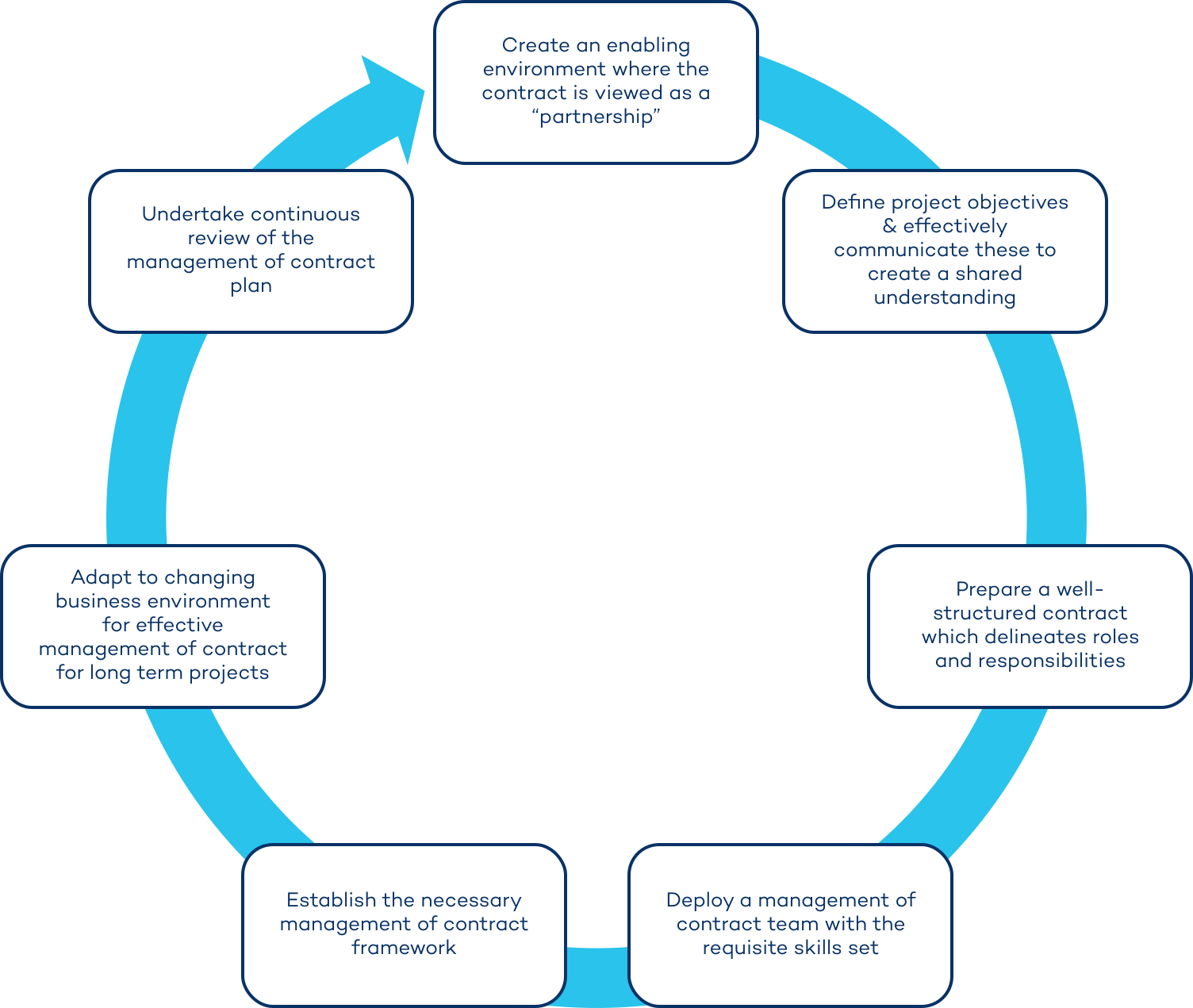

Management of Contract Framework under Bappenas Regulation 7/2023
The foundation of the PPP agreement management in Indonesia is laid out in Bappenas Reg. 7/2023. This regulation establishes the structure, responsibilities, and supervision mechanisms for the PPP management of contract. It applies to all sectors as a national baseline for central and regional projects.
Management of contract begins once the GCA achieves financial close, i.e., it has obtained full funding for project execution. This marks the point at which the responsibilities of the GCA in managing the contract are formally activated. During the management of contract stage, the GCA carries two main functions: the preparation and the supervision on the implementation of the PPP Agreement.
For the supervision on the implementation of the PPP Agreement, the GCA’s monitoring activities should specifically cover these activities:
- Construction activities (timelines, quality, and scope);
- Service delivery / provision, (compliance with agreed service levels or performance standards); and
- Preparation for contract termination (handover, asset transfer, or end-of-term compliance).
The PPP Node supports the GCA in coordination, performance tracking, and technical advisory roles.
Furthermore, Bappenas Reg. 7/2023 stipulates that monitoring activities must also include the supervision of the service provision activities and it shall at minimum cover the achievement of the agreed service availability standards. In the case that where the investment return is based on Availability Payment (AP), the IBE shall report the achievement of service availability to the GCA. Additionally, if Viability Gap Fund (VGF) is provided, the IBE shall report the management of the VGF to the GCA.
For the purpose of management of contract, any amendments to the PPP Agreement shall follow the condition stipulated in Article 53 of Bappenas Reg. 7/2023. Further explanation/ guidelines of amendment of PPP agreement refer to contents under “Toolkit - Managing Cross-Cutting Issues” section.

Introduction
Primary activities of management of contract include developing its framework. Since management of contract is a complex function and comprises multiple - at times parallel, at times sequential – activities, primary activities are divided into four main components as follows:
- Establishing governance and the management of contract team;
- Planning, establishing, and executing contract administration;
- Relationship management; and
- Performance management.
Relationship between Risk, Service Delivery and Management of Contract
Risk, service delivery, and management of contract are inter-connected.
A project risk is the effect of uncertainty on project objectives. It is the chance of an event occurring that may cause actual project circumstances to differ from those assumed when forecasting the project’s benefits and costs. As such, project risk is also expressed as a combination of the consequences of an event or a change in circumstances, and the associated likelihood of its occurrence. This may impact IBE’s and GCA’s obligations and thereby impact project objectives and outcomes.
Service delivery is central to PPP projects. Essentially, the GCA enters into contracts with the IBE to deliver the contracted services to prescribed standards in accordance with applicable regulations, and the GCA makes payment based on the delivery of the services and in line with applicable regulations.
Service delivery in PPP projects is measured by predefined performance indicators and quality standards embedded within the PPP aegreement. If risks — for example: technical failures or market fluctuations — are not properly managed, service levels may drop below the agreed benchmarks. This situation triggers contractual remedies such as penalties or renegotiations. On the other hand, timely, high-quality service delivery builds public trust, stakeholder satisfaction, and contract durability.
Management of contract defines the processes which directs parties to the PPP agreement to meet respective obligations (including service delivery obligations) and in turn meet project objectives and outcomes. Management of contract encompasses monitoring compliance, reporting, dispute resolution, and updating obligations throughout the PPP lifecycle.
Good management of contract ensures that risks are idenfitied, allocated, and mitigated proactively, and that the service delivery standards are maintained. It is the mechanism by which risks are reviewed, shared, and escalated, ensuring obligations and remedies are executed as per agreement. Hence, risk, service delivery, and management of contract are tightly interlinked in a PPP agreement, directly influencing project outcomes and stakeholder satisfaction.
Activities
The following sub-sections introduce the 4 (four) components or primary activities of management of contract.
-
Establishing governance and the management of contract team
- The management of contract team
-
The VfM generated through a PPP depends on the quality of the IBE and the GCA’s management of contract systems and teams. This becomes more important in PPP agreement which include some form of risk retention on the GCA’s part e.g., minimum revenue guarantee or a type of contractual undertaking.
-
The PPP agreement will set out the various obligations of the IBE with regard to the management and reporting of its activities and achievements against the output specifications. As a PPP agreement may have limited obligations for the GCA, it is common for the GCA to assume that the PPP agreement will be self-regulating and self-reporting. However, the GCA shall not rely on this assumption. The assumption may result in:
- Weak governance;
- Weak management of contract frameworks being established by the GCA; and
- Reduction in the overall project benefits compared to estimation in various ex-ante (forecast) studies.
-
The GCA shall make efforts to prevent the above situations. Hence, as a good practice, the GCA shall establish a management of contract team.
-
Governance in management of contract functions during the project’s early stage unlocks benefits such as:
- Helps build in-depth project knowledge from the inception and therefore a strong negotiating position when the project is in procurement;
- Eases co-ordination and integration of all stakeholders and works once the project is in the construction stage; and
- Builds familiarity with proposed service measurement targets and preparation for their monitoring.
-
Governance and management of contract functions also reduce the chance of possible pitfalls such as:
- A lack of knowledge and understanding of the IBE’s intentions when devising their solution and the content incorporated into the contract, resulting in conflict and affecting the establishment of the partnering relationship;
- Poorly monitored and executed financial management because the management of contract function is not involved in the design of the payment mechanisms at the transaction stage;
- A lack of opportunity to influence the implementation of services. A lack of awareness of problems and the implementation of the solutions can be avoided if the management of contract function is involved from the inception of the project; and
- A lack of knowledge of the signed contract, obligations, and roles and responsibilities arising from the late appointment of the management of contract function may delay the project, bring indecision and in certain circumstances, affect the GCA-IBE relationship.
- Planning of Administrative Processes
-
Properly implemented administrative processes are crucial for effective risk management. This is because risk management & risk control are most important factors in the PPP lifecycle. Hence, for planning and establishment of administrative processes, the GCA shall:
- Formalise management responsibilities for transition between project stages;
- Monitor project delivery, service outputs, and contract performance;
- Manage change and variations;
- Maintain contract integrity;
- Promote strong working relationships with the project parties and service providers;
- Resolve project issues and disputes fairly and efficiently; and
- Conduct regular contract and project reviews to ensure continuous improvement.
-
Therefore, the contract director shall prepare the PPP management of contract plan, focusing on PPP management of contract responsibilities and include in it:
- Summary of the proposed systems and procedures for variation management, PPP agreement monitoring, and financial administration;
- Roles, responsibilities, and obligations of the GCA and the IBE and independent experts in relation to variation management, PPP agreement monitoring, and financial administration;
- Plans for the development of the PPP management of contract plan that will be used to provide details of all documents relating to the PPP agreement, variation management, PPP agreement monitoring, and financial administration procedures; and
- An estimate of the resources that the GCA will devote to variation management, PPP contract monitoring, and financial administration.
- Formulating the Management of Contract Plan
-
A management of contract plan is a collection of policies and procedures, as a living document used throughout the life of the project. It reflects the specific contract to be managed and meets the needs of the contract director and the management of contract team.
-
The plan serves as a tool of knowledge management and is important for succession planning and transfer of knowledge. The GCA ensures that new members of the management of contract team receive specific training regarding the use of the plan.
-
The plan should be able to provide answers to key questions such as:
- What needs to be done, by whom and when?
- What are the effects of any failure to deliver contracted services or default by the IBE or the GCA and how should such failures be addressed?
- What are the service delivery requirements and payment arrangements?
- Who are the key stakeholders and what are the communication arrangements?
-
And, the plan should provide the historical context and address strategic issues such as:
- How will the GCA's role be performed?
- What is the strategy for managing the project and for dealing with the IBE?
- What was the rationale for key project decisions made so far? What lessons have been learnt?
- Implement Information and Documentation Management
-
The GCA relies on accurate information and relevant documentation to make sound decisions, monitor the IBE’s performance, comply with its contractual obligations, and manage project specific risks. In a typical PPP project, the IBE provides most of the information. The GCA’s role is to receive this information and verify that it is accurate and consistent.
-
The GCA’s most common requirement is to ensure that the IBE provides information surrounding financial, legal, and technical issues. The GCA requires these to successfully monitor and review the IBE’s performance.
-
When drafting the contract, the GCA shall be clear and prescriptive with regard to the level of detail, format, and deadlines of the data expected from the IBE. During both, construction and service delivery stages, the type of information needed from the IBE should be carefully considered in order to avoid requiring too much information, which would be costly to produce and collate for the IBE and also for the GCA to analyse.
-
Given the importance of information and documentation cited above, the GCA is required to put in place a system of information and documentation management applicable for throughout the life of the contract.
- Management Information Systems (MIS) for a PPP project
-
An MIS records and manages activities and documentation of a PPP project. Using an MIS, the GCA is able to closely monitor the performance of a PPP agreement to ensure the IBE’s proper and constant engagement. This is because the PPP agreement should ultimately aim to deliver an efficient service to a range of end-users.
-
PPPs are very long tenure projects. Managing relationships between the various parties in a PPP agreement can be complex and detailed. A single PPP can have several stakeholders – contractual parties, lenders, Special Purpose Vehicle (SPV) shareholders, end-users, regulators, legislative and executive arms of the government/GCA, and communities.
-
Crucially, one risk that cannot be quantified is relationship risk and it is more complex than several other risks. Therefore, a few key factors should be considered while establishing good relationships in PPP agreements. These factors are elaborated in Toolkit section I ‘Preparatory Activities’.
-
Besides, the importance of stakeholder management in a PPP agreement cannot be undermined. Project success and failure is related to stakeholders’ perceptions of the value created by the project. Using a mechanism to assess the relative influence of a project’s stakeholders and understanding their expectations is a critical element for success, as this helps define appropriate engagement procedures to influence the key stakeholders for the project’s benefit.
-
The purpose of stakeholder management at the project level is to ensure that the necessary individuals or groups are appropriately lobbied and engaged, in order to ensure their ongoing support to the project. Key interfaces with internal stakeholder groups include the partnership committee, although the project communications strategy should address the majority of the organisation in some form. Important external stakeholder groups may include critical suppliers, various governmental bodies, regulatory bodies, community groups, and third-party investors. Thus, any stakeholder who has a financial, business, or political interest in the project’s outcome is to be considered when establishing relationship interfaces.
-
In addition, the GCA is meant to consider relationships with communities and broader stakeholder groups, such as project-affected parties, including women, persons with disabilities and/or specific social or disadvantaged groups, consulted during public consultations in the planning and preparation stages in line with the laws and regulations.
-
As the GCA itself may not be the end-user in several projects, the GCA should involve end-users at an early stage because inadequate consultation of stakeholders, including affected communities, can lead to delays in project implementation or make the management of contract challenging. It can also result in underestimation of certain risks and limit the ability of both the GCA and the IBE to mitigate certain sensitive risks such as:
- Public objection to related fees;
- Administrative risks, e.g. land acquisition and construction permits;
- Local residents and communities objecting to the project/project-affected parties;
- Lack of representation of women, persons with disabilities, and specific social or disadvantaged groups; and
- Operational staff, such as teachers in the case of a school project, objecting to the project.
-
Performance measures, linked to strategic objectives or to desired project outcomes, constitute the core basis of performance management in a PPP agreement. The GCA shall monitor and measure the service performance of the IBE to ensure that contractual compliance is achieved and demonstrated. Management of service performance is fundamental to the PPP agreement. This is so because it is through this process that payments to the IBE are calculated and any deductions made. Hence, it is vital that there is a sound understanding of the relationship as it may impact requirements in the output specifications, the performance measurement system, and the method for making deductions for poor performance of the IBE as set out in the payment mechanism.
-
In fact, as mentioned in the success factors of management of contract in the previous section, it would be useful for the GCA to develop and implement a knowledge and information management strategy tailored to the project. This helps ensure that the information collected is relevant to performance management, maintained, periodically reviewed, and organised for easy retrieval. This can enable the GCA to comply with obligations relating to information retention, disclosure, and protection. This practise can also enable the GCA to efficiently undertake a range of activities including its payment arrangements, administering change notices, and effective asset lifecycle replacement using transparent asset registers.
-
More details and instructions on performance monitoring and management are provided later in this toolkit in the ‘Service Delivery’ stage.

Management of Contract Institutional Framework
Effective PPP management of contract relies on coordinated governance across three levels, as outlined in Chapter 7 of the APMG PPP Guide:
- Partnership Committee (Strategic Oversight)
-
The Partnership Committee operates as a high-level strategic forum composed of senior representatives from both the public and private sectors.
- Members: Oversight officials from local authorities, chief financial officer(s), auditors, public consultation representatives, key stakeholders, and IBE delegates, ensuring male and female representation.
- Purpose: To ensure project continuity, resolve strategic issues, and serve as a platform for stakeholder alignment.
- Meetings: Held quarterly or ad hoc as needed.
-
The GCA shall make efforts to prevent the above situations. Hence, as a good practice, the GCA shall establish a management of contract team.
- Management of Contract Board (Tactical Coordination)
-
This board is responsible for the day-to-day implementation of contract terms, with a focus on service performance and contractual compliance.
- Members: Contract managers, audit personnel, HR, insurance, and public sector teams — typically including SPV representatives and male & females representatives as well.
- Purpose: To review ongoing issues, monitor service delivery performance, and address contract-related problems.
- Meetings: Conducted monthly.
- Operational Management Team (Service-Level Execution)
-
The operational level handles the technical and administrative functions necessary for daily service delivery.
- Members: Service performance leads, operations managers, and administrative assistants ensuring male and female representation.
- Purpose: To identify early operational issues, manage service-level obligations, and address any changes that may impact project performance.
- Meetings: Daily check-ins with operational teams.
This three-layered model ensures that PPP management of contract is both strategically aligned and operationally responsive, allowing for proactive risk mitigation, accountability, and continuous service improvement.
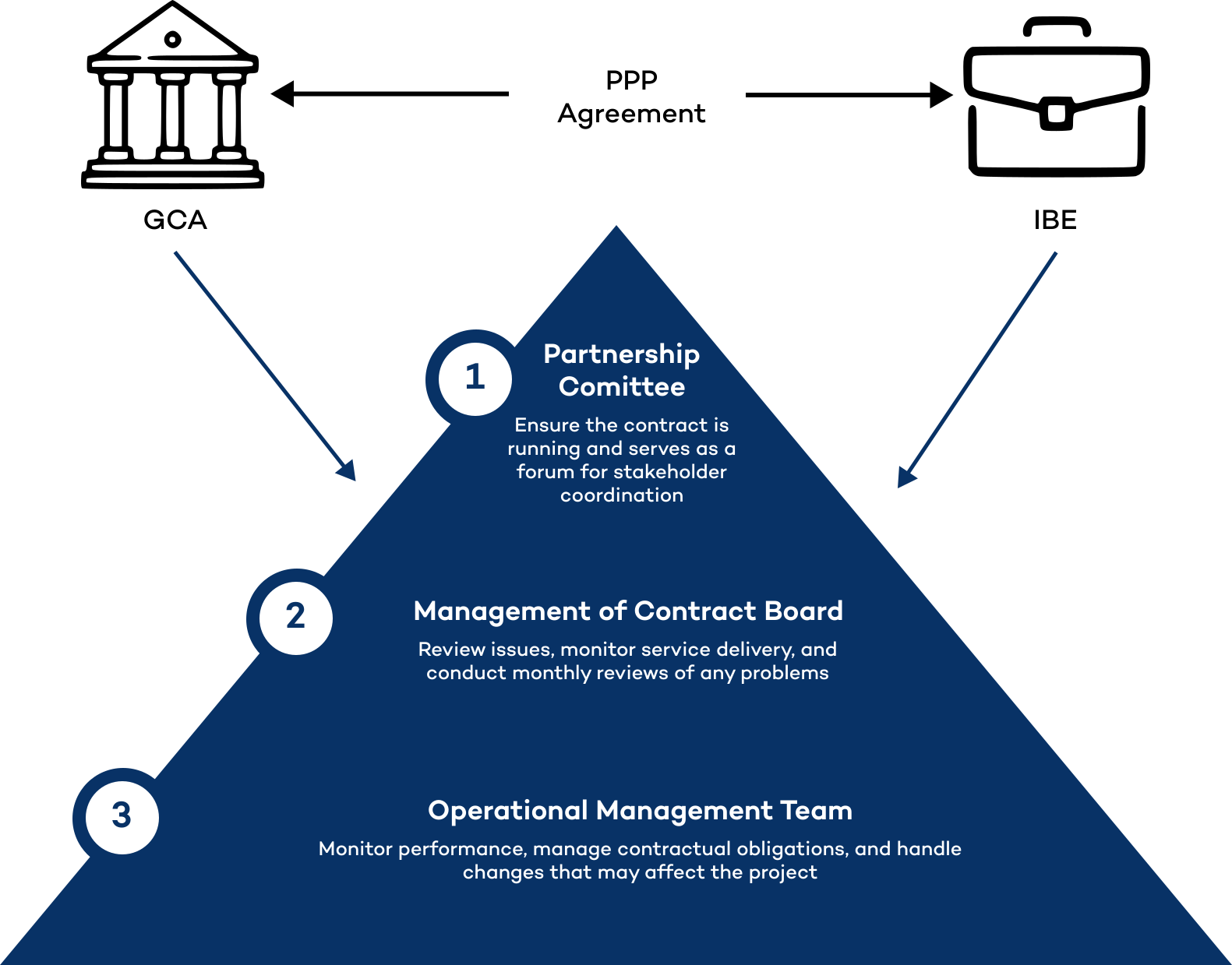
Management of Contract Institutional Framework – Bappenas Reg. 7/ 2023
Bappenas Reg. 7/2023 highlights the role of the PPP Node as a technical unit supporting the GCA in ensuring consistent and structured implementation of PPP agreements.
The PPP Node is a functional unit within a government institution that supports the GCA in all stages of the PPP process, including management of contract. Its duties cover contract preparation, implementation oversight, and performance monitoring across construction, operation, and handover stages.
- Phase 1: Preparation for PPP Management of Contract
- Ensure proper budget planning;
- Conduct oversight on the implementation of the PPP project, including service performance evaluation;
- Report to the GCA and coordinate with central or head office units; and
- Develop internal policies, coordinate across stakeholders, and supervise and evaluate each stage of PPP management of contract.
- Phase 2: Monitoring Implementation of the PPP Agreement
- Oversee construction progress in accordance with the PPP agreement;
- Identify and report potential failures or the inability of the IBE to meet contractual obligations;
- Flag delays or changes in the construction schedule;
- Review and process design changes (upon GCA’s request);
- Assess the readiness of the IBE for the operational stage;
- Ensure alignment between technical planning and actual construction;
- Manage labor-related issues and risks borne by the GCA;
- Facilitate Viability Gap Funding (VGF) processes with the Ministry of Finance; and
- Support the implementation of guarantee and regress agreements.
The PPP Node functions as an operational bridge between the GCA and other stakeholders The PPP Nodes serves as a technical controller to ensure accountability, performance orientation, and full compliance of parties with contractual commitments.
The implementation of PPP agreements involves more than just the GCA and the IBE. Several government institutions play key roles during management of contract to ensure oversight, policy alignment, fiscal support, and performance accountability. Outlined below are the relevant stakeholders involved, among others:
-
National Development Planning Agency (Bappenas)
As the national policymaker for development planning, Bappenas maintains its role during management of contract to ensure that the project continues to contribute to long-term development goals. Their key roles here include collecting and evaluating periodic updates on project implementation, especially from strategic sectors; and serving as the secretariat of the PPP Joint Office. This ensures a feedback loop between project-level execution and policy-level planning.
-
Ministry of Finance (MOF)
The MOF remains a key actor in supporting projects that receive government financial contributions. Key roles during managememt of contract include:
- VGF disbursement: ensuring that public financial support for construction and/or operation stages is aligned with performance outcomes and contractual conditions.
- Monitoring fiscal exposure related to long-term availability payments or contingent liabilities.
- Evaluating implications of contract amendments that may impact the state budget.
- Continued communication between GCA and MOF is essential, especially when disbursement schedules, milestone compliance, or fiscal risks evolve over time.
-
Ministry of Home Affairs (MoHA)
MoHA has a supervisory mandate over regional governments, including governors and mayors who act as GCA. Its roles during management of contract may include monitoring regional compliance with PPP obligations and facilitating coordination between subnational GCAs and national institutions.
Though indirect, MoHA’s oversight ensures local PPP projects remain within the national administrative framework.
-
Regulatory Agency of State Owned Enterprises (MoSOEs)
For PPP projects where the GCA is a state-owned enterprise (SOE), the Regulatory of Agency of SOEs (previously known as Ministry of State-Owned Enterprises) has a governance role over the performance and compliance of SOE leadership.
This may include oversight of directors’ decisions, particularly in areas involving long-term financial commitments or performance deviations from the PPP Agreement.
-
PPP Joint Office
The Joint Office is an institutional platform to align stakeholders and to ensure synchronisation across agencies during all stages, including during management of contract. Participating agencies include: Coordinating Ministry for Economic Affairs, Coordinating Ministry for Maritime Affairs and Investment, MoF, Bappenas, MoHA, Indonesia Investment Coordinating Board (BKPM), and National Public Procurement Agency (LKPP). The PPP Joint Office’s responsibilities include:
- Facilitating coordination and problem solving among institutions when issues arise during implementation.
- Serving as an interface between sectoral ministries, GCAs, and PPP Nodes for project supervision.
(Note: The composition of PPP Joint Office members may be adjusted from time to time to reflect any changes in nomenclature in Indonesia).
-
Local Parliament (Dewan Perwakilan Rakyat Daerah/ DPRD)
In regional PPP projects (e.g., water supply, waste management), the approval of DPRD is often required to allocate payments related to Availability Payment (AP) obligations during the service delivery stage.
Without DPRD endorsement, local GCAs (typically mayors or governors) may be unable to fulfill their financial obligations, posing risks to project sustainability.
-
Indonesia Infrastructure Guarantee Fund (IIGF)
The IIGF ensures that public sector risks such as delays in land acquisition or regulatory failure are guaranteed in a structured manner. During management of contract, IIGF facilitates the formation of a Joint Monitoring Committee in accordance with regulation of Ministry of Finance (no. 260/2016). The Joint Monitoring Committee plays several important supporting roles:
- Monitoring GCA's implementation risks that may activate a guarantee claim.
- Monitor implementation obligations of GCA and IBE and provide early warning on potential risks and support in mitigating it
- Reviewing major contractual developments, such as restructuring or renegotiation that affects risk allocation.
- Engaging in dialogue with GCA and IBE to clarify obligations under the Guarantee and Regress Agreements.
IIGF’s active involvement also contributes to investor confidence, particularly in long-term infrastructure assets.
-
Other Sectoral Ministries or Authorities
Depending on the sector (e.g., transportation, energy, water etc.), relevant ministries may ensure that performance standards are being met in accordance with service obligations, and provide support for regulatory compliance, particularly for permits, approvals, tariffs, and safety standards.
What, Why & When
- Lorem ipsum dolor sit amet, consectetur adipiscing elit, sed do eiusmod tempor incididunt ut labore et dolore magna aliqua. Ut enim ad minim veniam, quis nostrud exercitation ullamco laboris nisi ut aliquip ex ea commodo consequat. Duis aute irure dolor in reprehenderit in voluptate velit esse cillum dolore eu fugiat nulla pariatur. Excepteur sint occaecat cupidatat non proident, sunt in culpa qui officia deserunt mollit anim id est laborum.
Legal Basis
- Lorem ipsum dolor sit amet, consectetur adipiscing elit, sed do eiusmod tempor incididunt ut labore et dolore magna aliqua. Ut enim ad minim veniam, quis nostrud exercitation ullamco laboris nisi ut aliquip ex ea commodo consequat. Duis aute irure dolor in reprehenderit in voluptate velit esse cillum dolore eu fugiat nulla pariatur. Excepteur sint occaecat cupidatat non proident, sunt in culpa qui officia deserunt mollit anim id est laborum.
Primary Activities
- Lorem ipsum dolor sit amet, consectetur adipiscing elit, sed do eiusmod tempor incididunt ut labore et dolore magna aliqua. Ut enim ad minim veniam, quis nostrud exercitation ullamco laboris nisi ut aliquip ex ea commodo consequat. Duis aute irure dolor in reprehenderit in voluptate velit esse cillum dolore eu fugiat nulla pariatur. Excepteur sint occaecat cupidatat non proident, sunt in culpa qui officia deserunt mollit anim id est laborum.
Institutional Framework
- Lorem ipsum dolor sit amet, consectetur adipiscing elit, sed do eiusmod tempor incididunt ut labore et dolore magna aliqua. Ut enim ad minim veniam, quis nostrud exercitation ullamco laboris nisi ut aliquip ex ea commodo consequat. Duis aute irure dolor in reprehenderit in voluptate velit esse cillum dolore eu fugiat nulla pariatur. Excepteur sint occaecat cupidatat non proident, sunt in culpa qui officia deserunt mollit anim id est laborum.
Key Stakeholders
- Lorem ipsum dolor sit amet, consectetur adipiscing elit, sed do eiusmod tempor incididunt ut labore et dolore magna aliqua. Ut enim ad minim veniam, quis nostrud exercitation ullamco laboris nisi ut aliquip ex ea commodo consequat. Duis aute irure dolor in reprehenderit in voluptate velit esse cillum dolore eu fugiat nulla pariatur. Excepteur sint occaecat cupidatat non proident, sunt in culpa qui officia deserunt mollit anim id est laborum.